A Brief History of Sweetgrass Baskets in the Carolinas
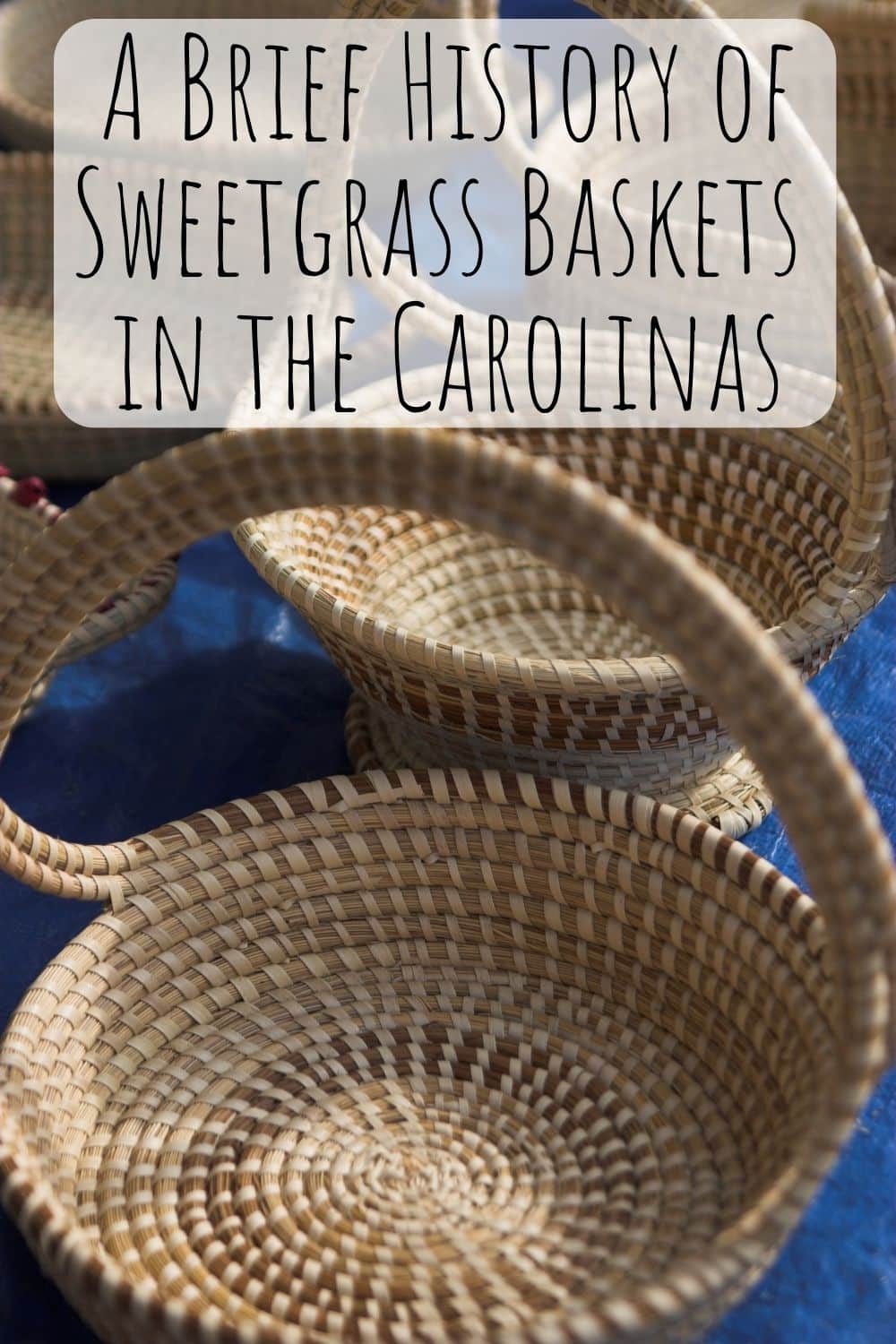
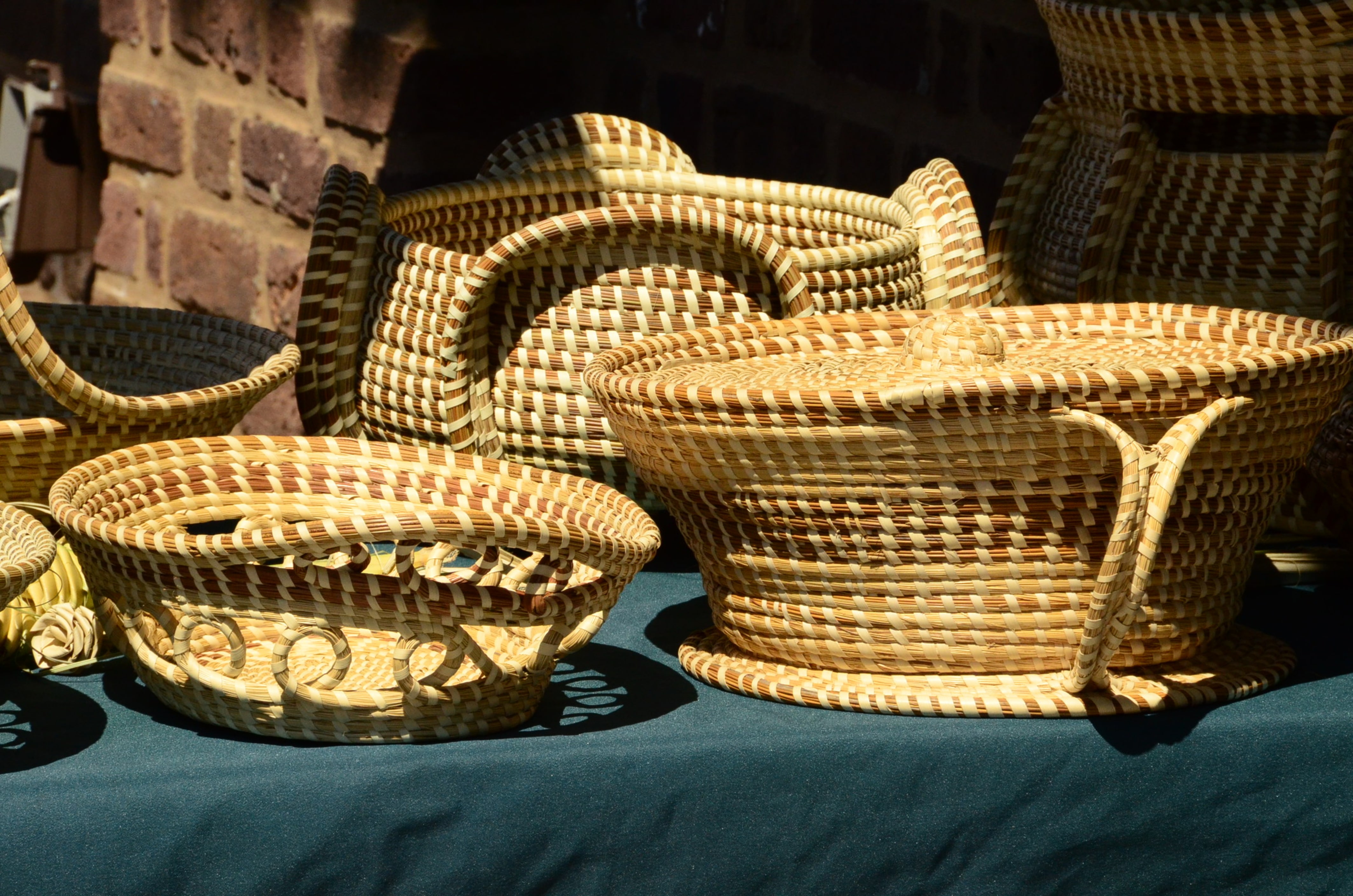
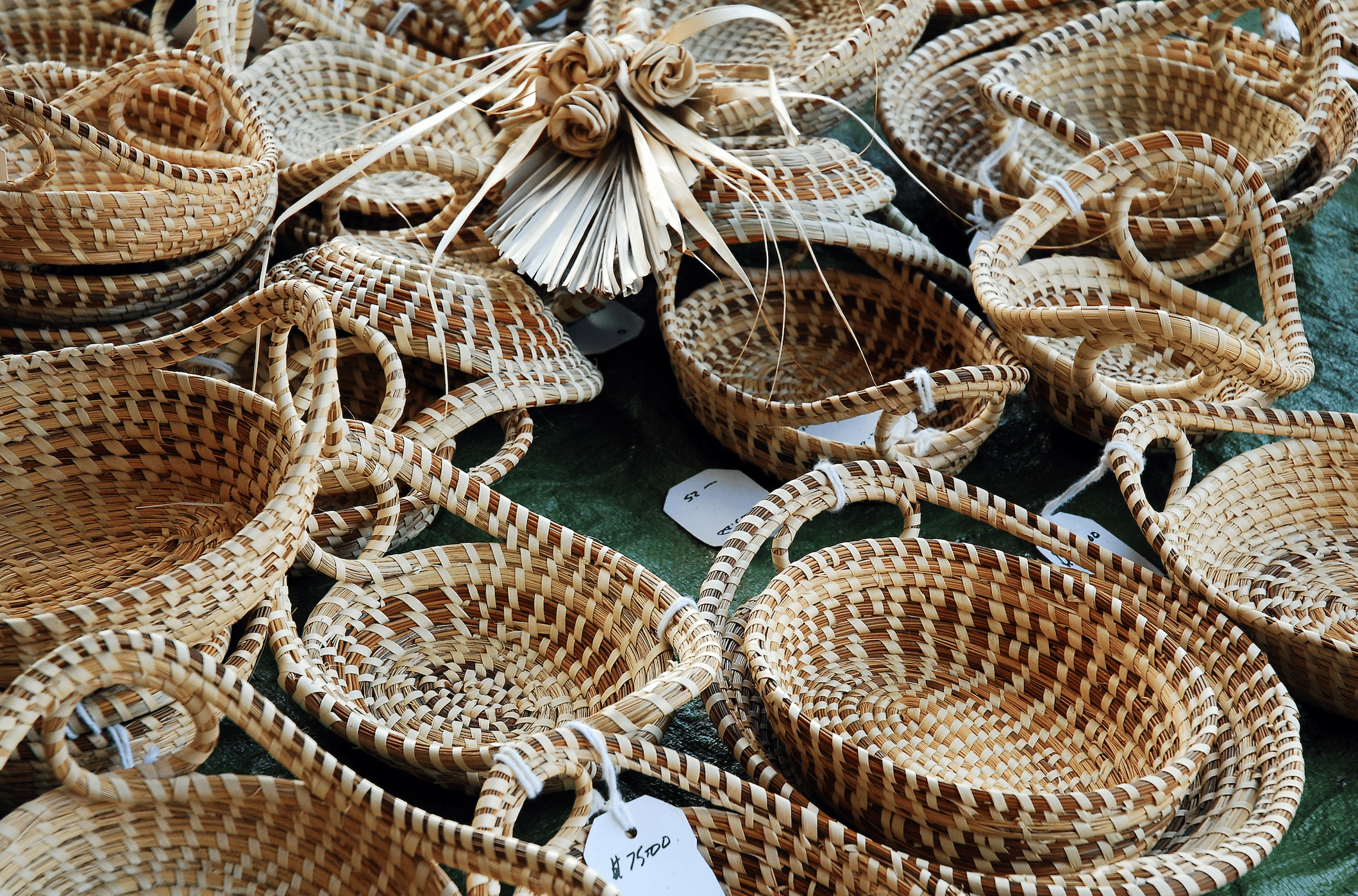
Woven from the grasses and marshes of the southeastern coast, sweetgrass baskets are one of the most enduring and beautiful art forms in the American South. If you’ve ever wandered through Charleston’s City Market or driven along the highway north of the city, you’ve probably seen them piled high at roadside stands–coiled, fragrant, impossibly intricate. But these baskets are far more than a pretty souvenir. They carry more than 300 years of history, survival, and cultural pride, and their story begins not in the Carolinas at all, but across the Atlantic on the west coast of Africa.
African Origins
The tradition of coiled basket weaving is deeply rooted in West African culture, and it was enslaved Africans who carried this knowledge with them to the shores of the American South. Beginning in the late 1600s and continuing through the 18th and 19th centuries, slave traders brought thousands of people from West African coastal regions to the South Carolina and Georgia Lowcountry to work on rice plantations. Many of these individuals came from cultures with long traditions of weaving functional baskets from local grasses and plant fibers.
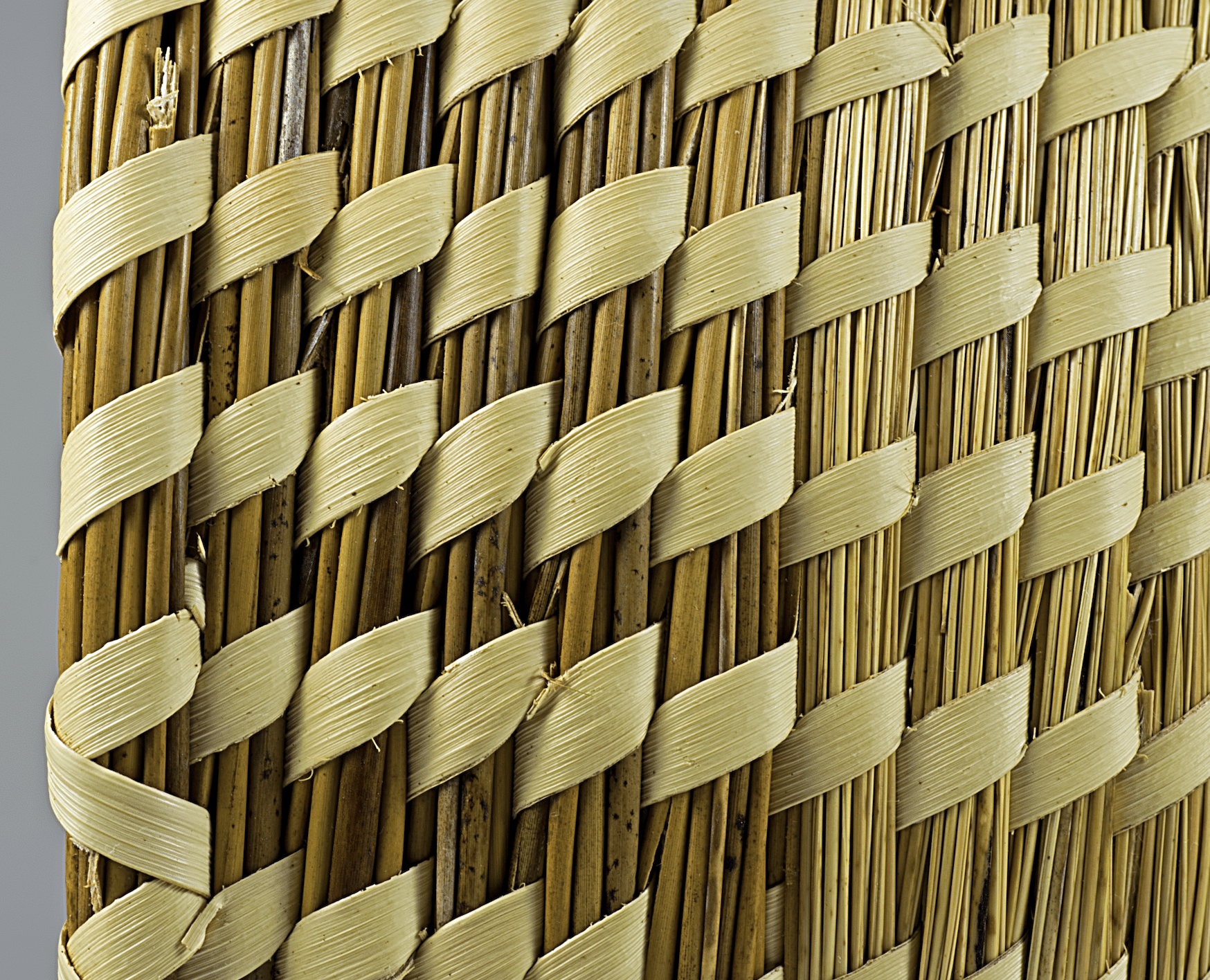
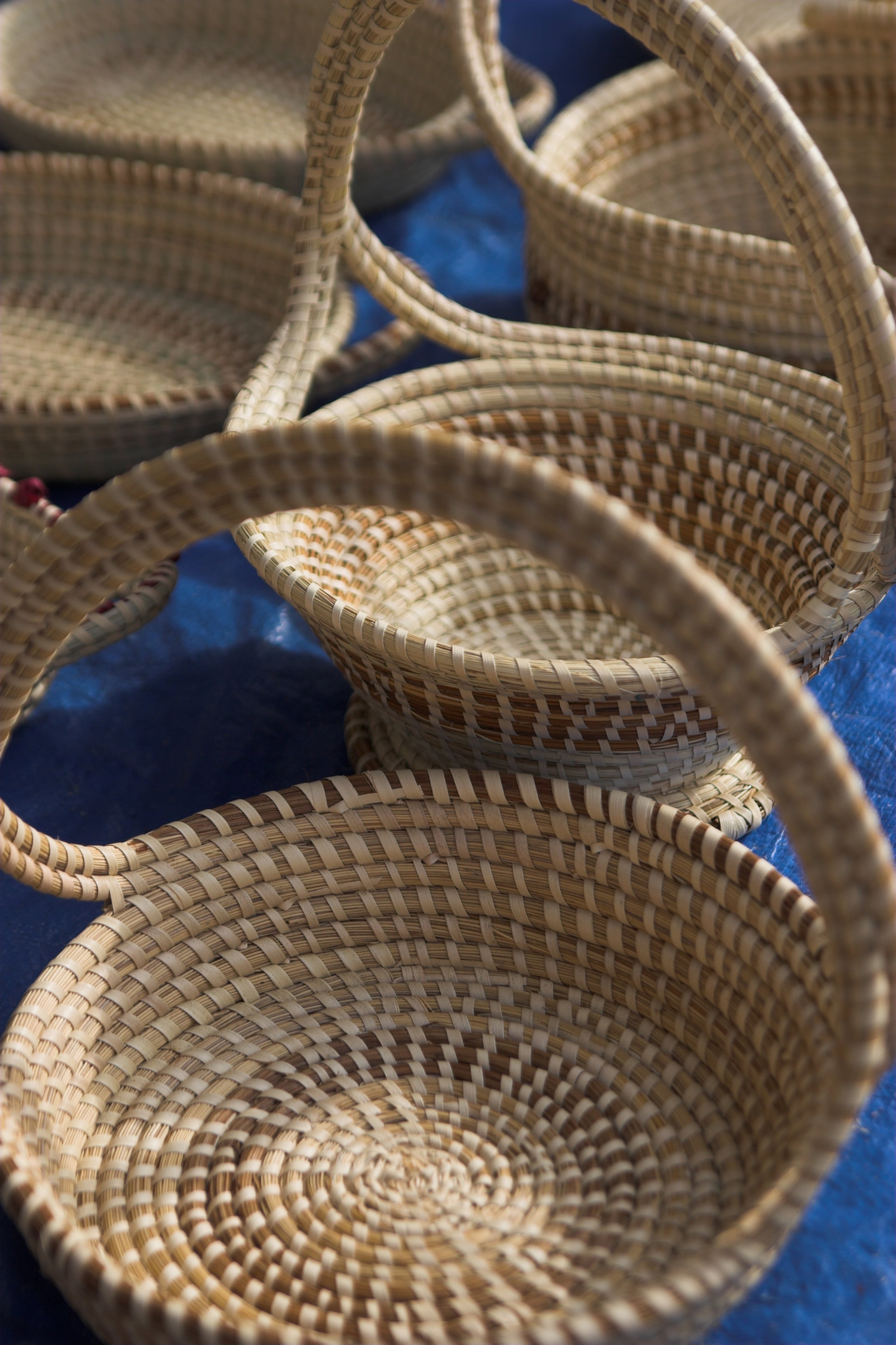
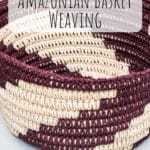
The style of weaving they practiced–coiling long ropes of grass and stitching the coils together–was distinctly different from the plaiting and braiding techniques common in European basket-making traditions. Rather than interlocking strands, the coiling method builds upward in tight, overlapping spirals, producing a dense and remarkably sturdy vessel. This technique closely resembles the shuku blai baskets of Sierra Leone, and scholars have long pointed to that region as one of the most significant points of origin for the Lowcountry style.
A Tool of Plantation Labor
Once in the Carolinas, enslaved people adapted their weaving traditions to the materials available in the coastal landscape. Early baskets were made primarily from bulrush (a needlegrass rush), with coils bound together using strips of white oak bark or strips of saw palmetto leaf. These were workhorse objects, made for a specific and demanding purpose: winnowing rice.
The shallow, wide-mouthed “fanner basket” was the most essential design of the plantation era. Workers would fill it with harvested rice and toss the grain into the air, letting the breeze carry away the chaff while the heavier grain fell back into the basket. It was grueling, skilled work and the baskets that made it possible were entirely the creation of the enslaved community.
Despite the brutal context in which they were made, these baskets represent an extraordinary act of cultural preservation. The Gullah Geechee people, as the descendants of these enslaved West Africans came to be known, maintained their weaving traditions across generations of enslavement, largely because of the geographic isolation of the Lowcountry’s coastal islands and marshes. Cut off from the mainland for much of the year, Gullah communities were able to hold onto language, foodways, spiritual practices, and crafts that other African American communities had lost.
Cultural Significance
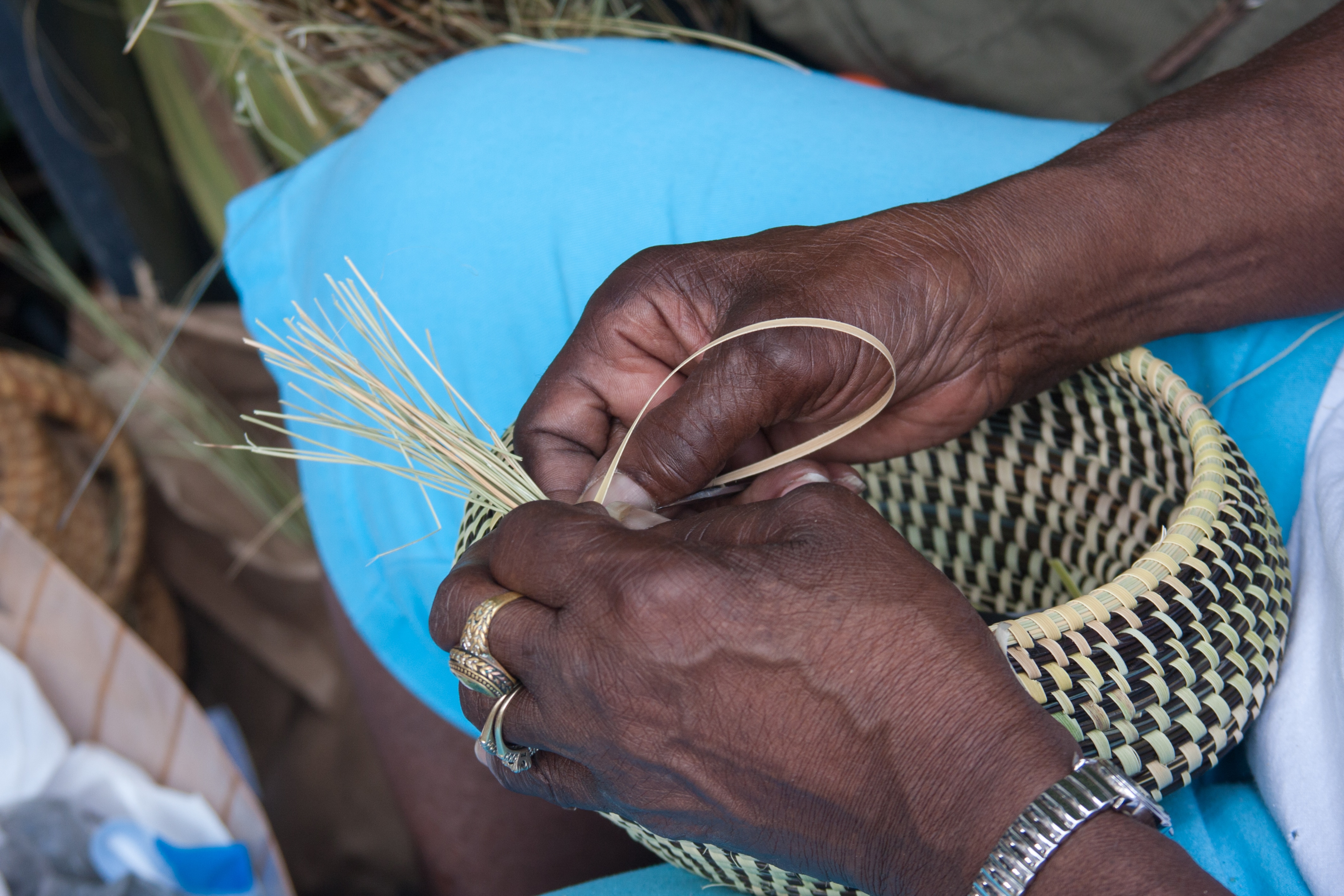
Sweetgrass basket weaving has never been just a craft. It is a form of cultural memory, a way of transmitting identity and history from one generation to the next. Traditionally, the skill passed from mother to daughter or from grandmother to grandchild, learned not from a book or a class, but by sitting beside someone and watching their hands.
The baskets themselves evolved over time as the needs and circumstances of the Gullah community changed. After the Civil War, with the plantation economy collapsed and a new economic reality taking shape, basket makers began selling their work more widely. By the early 20th century, sweetgrass baskets had become a desirable commodity among tourists visiting the Charleston area, and makers began to incorporate more decorative designs alongside the traditional utilitarian forms. The shift from fanner basket to art object was gradual, but it would eventually transform how the world understood this craft.
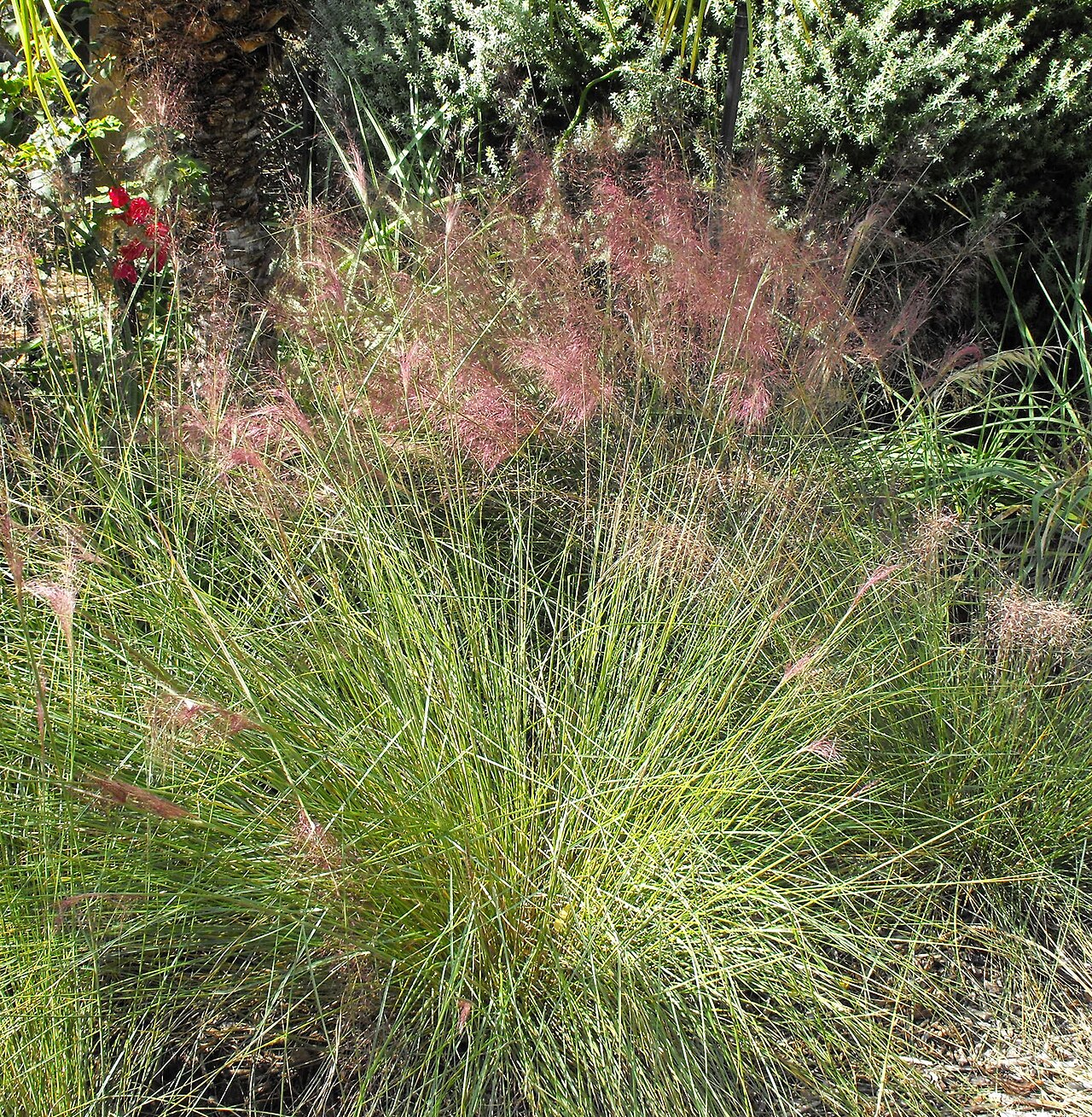
The materials also shifted slightly over time. While bulrush remained a staple, weavers increasingly incorporated the sweetgrass (muhlenbergia filipes) that gives these baskets their modern name. Sweetgrass, which grows in coastal meadows and along the edges of salt marshes, has a lovely flexibility and a faint, pleasant fragrance when fresh. Longleaf pine needles began to appear in many designs as well, adding both structural variety and a range of natural color. The only tools required throughout all of this history have remained remarkably simple: scissors and a “sewing bone”, traditionally a filed-down teaspoon handle or a piece of flattened metal used to part the coils and pull the binding through.
From Roadside Stands to Museum Walls
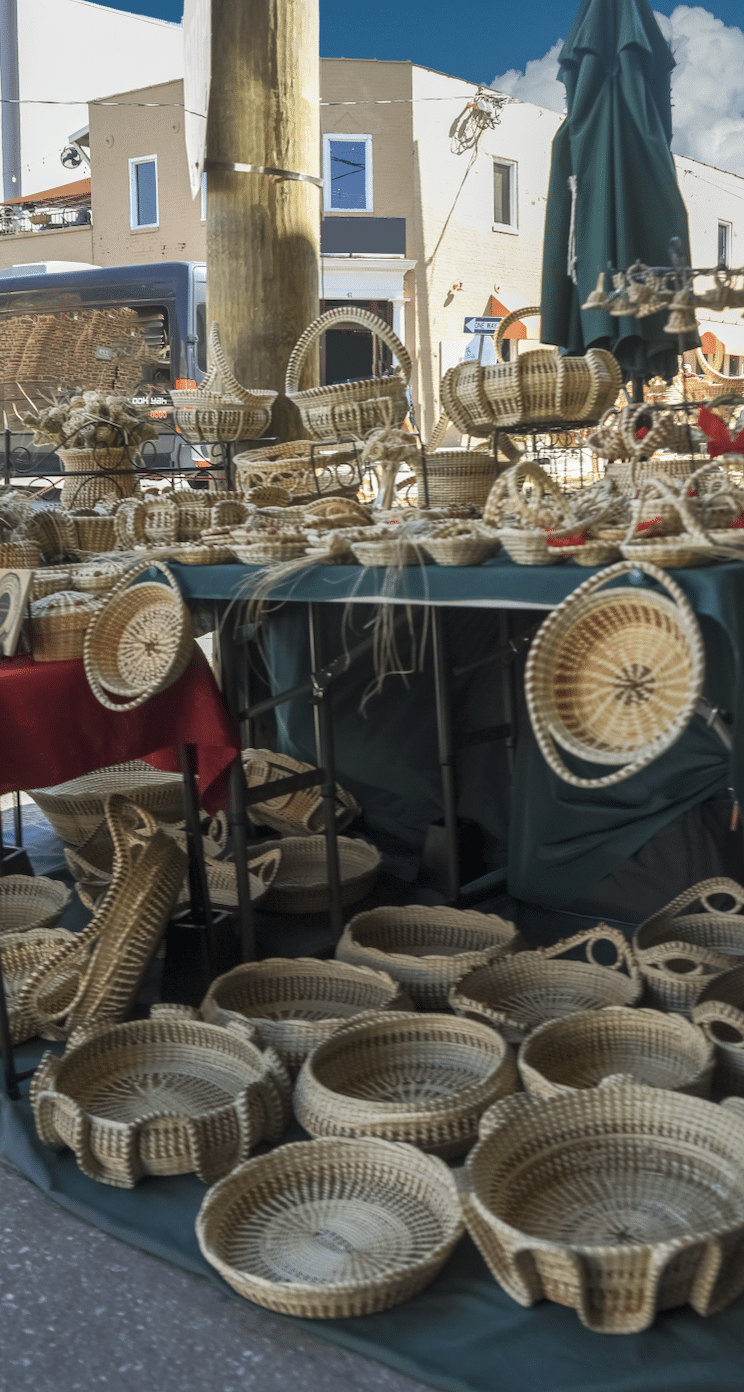
The 20th century brought new visibility to sweetgrass baskets–and new challenges. As Charleston grew and its tourist economy expanded, demand for the baskets increased, and makers found steady markets at the Charleston City Market and along U.S. Highway 17 north of the city, a stretch now officially designated the Sweetgrass Basket Makers Highway. Generations of families have sold their work from the same roadside stands, some for decades.
That recognition eventually extended to the art world as well. Mary Jackson, a Mount Pleasant weaver who began selling at the Charleston City Market in 1980, became one of the most celebrated figures in the tradition. Her sculptural, finely detailed baskets entered the permanent collection of the Smithsonian American Art Museum, and in 2008 she was awarded a MacArthur Fellowship–the so-called “genius grant”–in recognition of her artistry and her commitment to preserving the craft. It was a moment that said clearly: this is not folk art in the dismissive sense. This is serious, extraordinary work.
At the same time, the tradition has faced real threats. Coastal development has steadily encroached on the wetland habitats where sweetgrass grows, making the raw material harder to find and harvest. Younger generations have sometimes been reluctant to take up a craft that is deeply labor-intensive and, historically, poorly compensated. And the flood of mass-produced imitations in the souvenir market has made it harder for buyers to distinguish authentic Gullah-made baskets from cheap knockoffs.
Where to Experience Sweetgrass Basket Weaving Today
The good news is that the tradition is alive, cared for, and increasingly celebrated. Here are some of the best places to encounter it firsthand:
The historic City Market in downtown Charleston has been a gathering place for sweetgrass basket makers for generations. You can watch weavers at work, hear their stories, and purchase directly from the artists.
The roadside stands along this stretch of highway are one of the most iconic images of the Lowcountry. Pull over, take your time, and talk to the makers. Many come from families who have sold from the same spot for generations.
Located at Memorial Waterfront Park, this open-air pavilion hosts basket makers who demonstrate their craft and connect with visitors in a waterfront setting overlooking the Cooper River.
The museum has planted its own sweetgrass field to supply local artists, and you’ll frequently find Gullah basket sewers practicing their craft on the grounds. The museum store carries excellent examples of their work.
The federally recognized Heritage Corridor stretches from southeast North Carolina to northeast Florida, encompassing the full geographic range of Gullah Geechee culture. Visitor centers, cultural sites, and events throughout the corridor offer rich opportunities to learn about this community’s history and living traditions.
A Living Tradition
To hold a sweetgrass basket is to hold something that connects, in a direct and unbroken line, to West Africa, to the rice fields of colonial South Carolina, to generations of women sitting in the evening and teaching their daughters how to coil and stitch. The baskets are beautiful, but their beauty is inseparable from everything they’ve survived and carried.
The Gullah Geechee community has fought hard to preserve this tradition, and the rest of us are lucky for it. If you find yourself in the Carolinas, slow down and stop at a roadside stand. Buy a basket. Ask the maker about their family. And take a moment to appreciate that what you’re holding is not just a piece of handicraft–it’s a piece of living history.
This website uses cookies to improve your experience. We'll assume you're ok with this, but you can opt-out if you wish.AcceptRejectRead More
Privacy & Cookies Policy
Privacy Overview
This website uses cookies to improve your experience while you navigate through the website. Out of these, the cookies that are categorized as necessary are stored on your browser as they are essential for the working of basic functionalities of the website. We also use third-party cookies that help us analyze and understand how you use this website. These cookies will be stored in your browser only with your consent. You also have the option to opt-out of these cookies. But opting out of some of these cookies may affect your browsing experience.
Necessary cookies are absolutely essential for the website to function properly. This category only includes cookies that ensures basic functionalities and security features of the website. These cookies do not store any personal information.
Any cookies that may not be particularly necessary for the website to function and is used specifically to collect user personal data via analytics, ads, other embedded contents are termed as non-necessary cookies. It is mandatory to procure user consent prior to running these cookies on your website.